

-
 Rm.136,Lin he Zhong Rd. TianHe, Guangzhou, China.

Follow Us:
Rm.136,Lin he Zhong Rd. TianHe, Guangzhou, China.


 1,881
 MOQ:
Default
 Port:
Hangzhou
 Packaging:
Customizable
 Lead Time:
Default
 Size:
Default Size
 Color:
Default Color


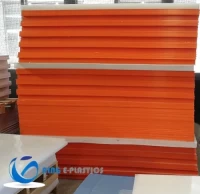
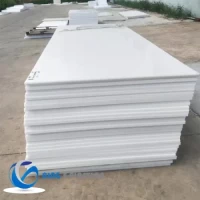
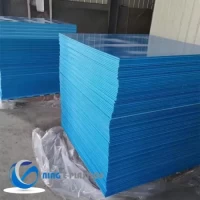
Colour: Black /white /red/yellow/orange/blue
HDPE Sheet Thickness: 2-200 mm, 0.2-3 mm
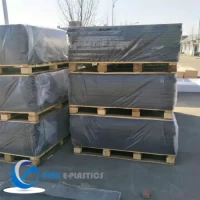
HDPE Sheet format: 1220 ×2440 mm, 1000×2000 mm
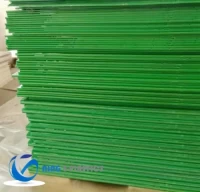
High-Density Polyethylene (HDPE) sheet is impact-resistant and abrasion-resistant, with a low coefficient of friction. The material is also moisture-, stain-, and odor-resistant, and is FDA-approved for use in the food processing industry (mainly for cutting boards). The material's durability makes it a strong fit for various applications, including water tanks, chute linings, bottle/bottle cap production, and many other industrial uses. Borated HDPE offers radiation protection in nuclear facility applications.
High-density Polyethylene, also known as HDPE, is made from a chain of ethylene molecules (the poly part of polyethylene) and is known for being lightweight and highly durable.
Demand for HDPE sheets is increasing significantly today because their strength and low weight reduce the material needed for production and packaging.
It is also available at Tap Plastics in sheet form with either a smooth or textured surface. The textured surface is also known as a cutting board. Both smooth and textured surfaces are FDA-approved for use in food contact applications.
| Item | RESULT | UNIT | PARAMETER | NORM USED |
| Mechanical properties | ||||
| Modulus of elasticity | 1000 | MPa | In tension | DIN EN ISO 527-2 |
| Modulus of elasticity | 1000 - 1400 | MPa | In flexure | DIN EN ISO 527-2 |
| Tensile strength at yield | 25 | MPa | 50 mm/min | DIN EN ISO 527-2 |
| Impact strength (Charpy) | 140 | Kj/m 2 | Max. 7,5j | |
| Notched Impact stren. (Charpy) | No break | Kj/m 2 | Max. 7,5j | |
| Ball indentation hardness | 50 | MPa | ISO 2039-1 | |
| Creep rupture strength | 12,50 | MPa | After 1000 hours static load 1% elong. after 1000 hours Against steel p=0,05 N/mm 2 | |
| Time yield limit | 3 | MPa | ||
| Coefficient of friction | 0,29 | ------ | ||
| Thermal properties | ||||
| Glass transition temperature | -95 | °C | DIN 53765 | |
| Crystalline melting point | 130 | °C | DIN 53765 | |
| Service temperature | 90 | °C | Short term | |
| Service temperature | 80 | °C | Long term | |
| Thermal expansion | 13 - 15 | 10-5K-1 | DIN 53483 | |
| Specific heat | 1,70 - 2,00 | J/(g+K) | ISO 22007-4:2008 | |
| Thermal conductivity | 0,35 - 0,43 | W/(K+m) | ISO 22007-4:2008 | |
| Heat distortion temperature | 42 - 49 | °C | Method A | R75 |
| Heat distortion temperature | 70 - 85 | °C | Method B | R75 |


 Reviews


